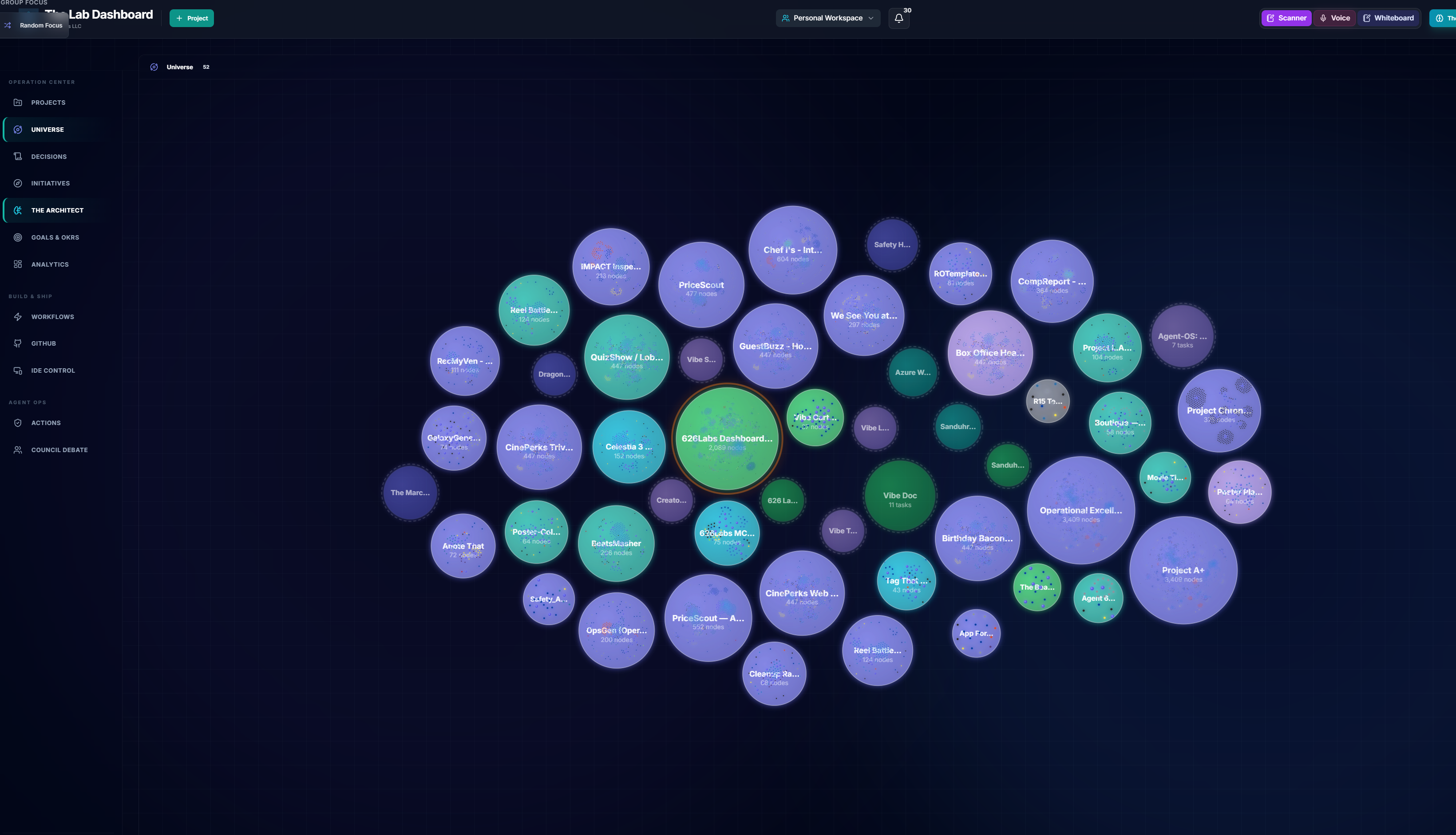
626 Labs builds modern tools for practices that have been running on spreadsheets, paper, and inherited habits for decades — or, in the case of astrology, a few thousand years. The brief is simple: look at a field that everyone assumes is "fine the way it is," and ship the version it should have had all along.
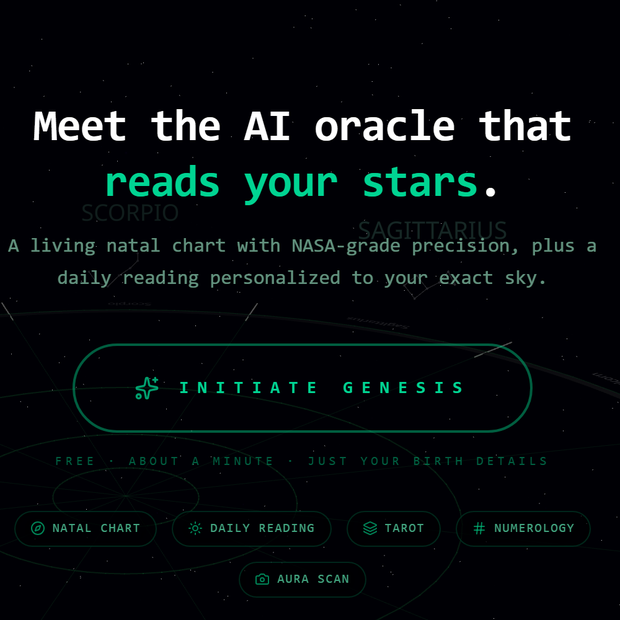
The proof case is Celestia 3. AI joined with tarot, numerology, and astrology in one surface. Partway through the build, we discovered the default Swiss Ephemeris engine drifted at the second-precision level. We didn't ship around it. We repaired the engine ourselves and met the NASA-grade bar. The point isn't the math — it's the posture. When the bar moves mid-build, we move with it.
That posture is what pulled us into the old empires — legacy operations, safety inspections, hotels, cinema exhibition. Off-the-shelf vendors build for the brochure. We build operator-first — the domain expert in the loop, the AI coder on the keyboard — and ship the tool the shift manager actually needed.
The Vibe plugins — Cartographer, Iterate, Insights, Keystone, Doc, Test, Thesis, Engine, Sec, Taker, Wrap, Walk, Prompt, Lingual, Access, Glow, Runbook, Recall — are the other half of the work. Vibe coding is the fastest way to turn an idea into running software right now. It's also the easiest way to end up with something that can't survive production. The plugins close that gap: planning, docs, tests, security, all built so a vibe-coded afternoon holds up in front of real users.
We See You at the Movies is the gaming wedge. Trivia and head-to-head card battles are warm-ups for bigger things on deck.
Every 626 Labs app is built like it might be seen by a thousand pairs of eyes, even when it may only ever be seen by one. That's the standard. I've deployed more apps to production than I ever imagined, and the bar keeps going up. Read the whole story.